Affiliate disclosure: This article contains affiliate links. We may earn a commission if you purchase through them, at no extra cost to you.
Why a new shed floor feels bouncy
A new shed floor feels bouncy for one simple reason: the floor assembly is flexing too much under your weight. In most cases the bounce comes from joists that are too shallow or spaced too far apart, floorboards or sheet material that is too thin for the span, or fixings and supports that were not fitted properly, rather than from anything being broken. Bounce is almost always a stiffness problem, not a strength problem, which is good news because it is usually fixable.
Bounce in any floor, including a shed floor, generally results from deflection in the floor system, and several factors influence how much it flexes: the framing, the subfloor, moisture and the load placed on it (Flooring Rating, https://flooringrating.com/why-floor-feels-bouncy-when-you-walk-how-fix-it/). New sheds bounce for slightly different reasons than old houses, so it helps to work through the likely culprits in order.
Key takeaways
- Bounce is deflection: the floor system is bending under load, usually because of undersized or widely spaced joists, a thin subfloor or missing intermediate support.
- A small amount of springiness in a new shed floor is normal and often settles; pronounced, worsening or creaking bounce deserves investigation.
- The most common shed-specific causes are long joist spans without mid-support, thin OSB or ply flooring, joists resting loosely on blocks or piers, and moisture swelling or softening the timber.
- Most fixes are straightforward: add mid-span supports, screw down or stiffen the subfloor, add noggins between joists or lay a thicker floor layer.
- If joists are rotted, crushed or badly warped, replace them rather than patching over them.
What actually causes deflection in a shed floor
Floor bounce happens when the structure flexes more than feels comfortable. In a house, the floor is made up of joists, a subfloor and the finished floor covering, and when any layer does not perform properly the floor flexes excessively (Carpet Reviewed, https://carpetreviewed.com/why-your-floor-feels-bouncy-when-you-walk-how-fix-it/). A shed floor is exactly the same assembly, just built with smaller timbers and lighter materials.
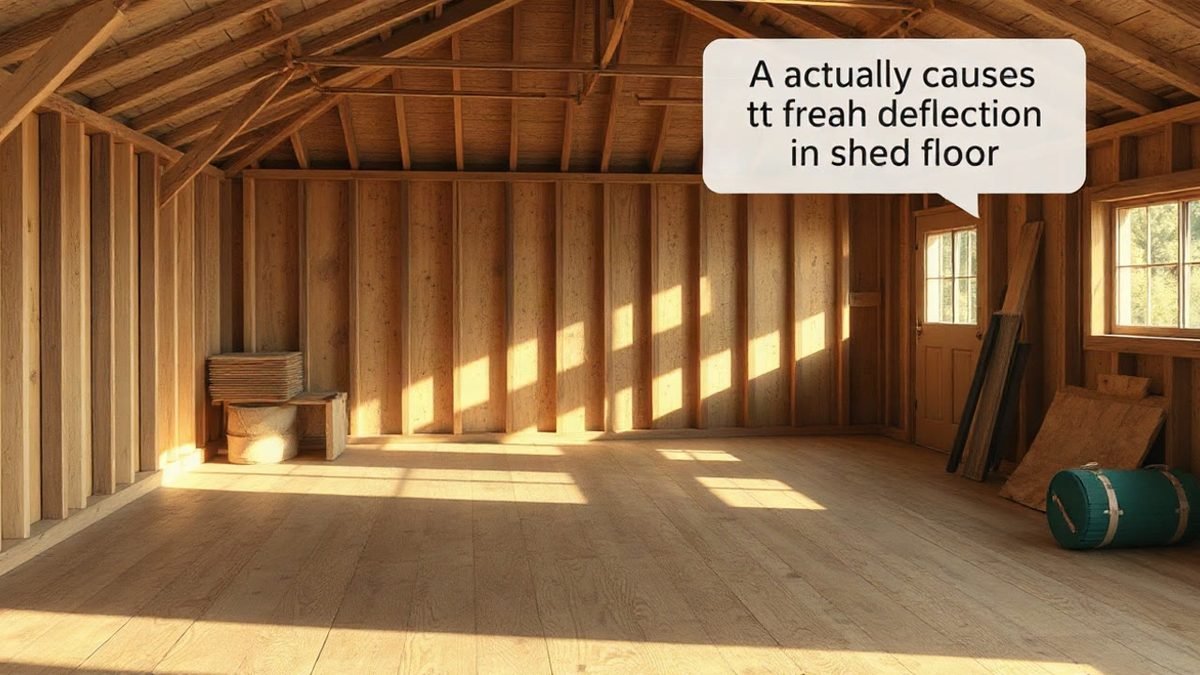
The sources point to a consistent set of causes: inadequate joist depth or spacing, over-spanned joists without intermediate supports, damaged or warped subfloor or joists, underlayment or subfloor failure, and moisture or pest damage (Flooring Rating, https://flooringrating.com/why-floor-feels-bouncy-when-you-walk-how-fix-it/). Sheds are particularly prone to the first two because builders often use whatever timber is to hand and stretch the joist spacing to save money.
Joists that are too shallow or too far apart
Shallow joists or widely spaced members reduce stiffness and make a floor feel springy under normal use (Flooring Rating). In domestic construction, standard joist spacing is often 16 inches (roughly 400mm) on centre, but wider spacing or thinner joists cause bounce (Phoenix Tile, https://phoenixtilespecialist.com/why-your-floor-feels-bouncy-when-you-walk-how-fix-it/). Widely spaced joists reduce stiffness and make a floor feel springy under load, and that matters even more once a shed holds a workbench and heavy tools (Flooring Rating).
Over-spanning: the classic new-shed mistake
Long spans without intermediate supports cause noticeable deflection (Flooring Rating). If your shed is 10 or 12 feet deep and the joists run the full depth without a central bearer or sleeper wall, even correctly sized joists will flex in the middle. This is the single most common reason a new shed floor feels bouncy across the middle of the building while feeling firm near the walls.
A subfloor that is too thin or poorly fixed
The subfloor carries the weight of everything above it and distributes loads to the joists; thin, poorly fastened or water-damaged subflooring flexes excessively under foot traffic (Carpet Reviewed). Gaps or loose panels also reduce stiffness (Phoenix Tile). If your shed floor is a single layer of 9mm or 11mm OSB screwed down over widely spaced joists, a certain amount of give underfoot is inevitable, especially between joists rather than on them.
Missing fixings, blocking and connections
Poor fastening techniques, such as missing nails or screws, or inadequate blocking between joists, reduce floor stiffness and cause movement when walking (Carpet Reviewed). Loose fixings at the joist-to-frame connections let the whole assembly work slightly under load, which you feel as movement and hear as creaks.
Moisture, settling and early-life movement
Water infiltration weakens timber, producing soft spots and bouncy floors, and rot or mould compromise structural strength (Carpet Reviewed). Any timber that gets wet, including sheet flooring materials, can be affected by moisture, and water-damaged subflooring can flex excessively underfoot (Carpet Reviewed). Loose fixings or an inadequately secured subfloor can also develop over time and add to floor movement (Carpet Reviewed).
Is some bounce normal in a new shed?
A modest amount of springiness is not automatically a fault. Joists are designed to deflect under load, and a shed floor built to a light-duty specification will always feel livelier than a house floor. The question is whether the bounce is consistent, stable and confined to the middle of spans, or whether it is getting worse over time.
Deflection from over-spanning presents as a noticeable springiness in the middle of the floor between supports. If the bounce stays the same from month to month and there are no creaks, soft patches or visible sagging, you likely have a stiffness issue rather than a failure, and you can choose to live with it or stiffen it. If the bounce is worsening, localised, or accompanied by creaking and visible dips, treat it as a repair job rather than a design quirk.
How to diagnose a bouncy shed floor: simple checks you can do today
Before buying any timber, spend twenty minutes working out where and why the floor moves. Practical at-home checks will tell you which of the common culprits you are dealing with (Flooring Rating).
- Map the bounce. Walk the floor slowly and note where it gives. Bounce in the middle of the shed points to over-spanning; bounce everywhere suggests joist spacing or subfloor thickness; bounce in one corner suggests a support or moisture problem.
- Check underneath. Look at the joists, bearers and any piers or blocks from below. You are looking for gaps between joist and bearer, crushed or rotten blocks, and joists that are visibly bowed or twisted, all of which compromise the rigidity of the system (Flooring Rating).
- Look for water damage. Damp stains, soft timber, swelling at panel edges or fungal growth mean water is getting in, and water damage weakens wood and accelerates deflection (Flooring Rating). Fix the leak before anything else.
- Test the fixings. Press down hard near panel edges and joist lines. Movement or creaking suggests loose nails or screws; re-secure any loose panels with screws rather than nails, as screws hold better and can be tightened again later.
- Measure what you have. Note the joist depth, the spacing between centres and the span between supports. This tells you whether the floor is under-specified for the load or simply missing a mid-span support.
How to fix a bouncy shed floor
Once you know the cause, the fix is usually a weekend job. Match the remedy to the diagnosis rather than throwing material at the problem.
Add mid-span support for over-spanned joists
If the joists run the full depth of the shed without intermediate support, the most effective fix is a central bearer: a beam on masonry blocks, concrete piers or adjustable feet running across the underside of the joists at mid-span, with packing so each joist bears firmly on it. Adding intermediate support shortens the joist span, and shorter spans without intermediate supports are a recognised cause of noticeable deflection, so reducing the span directly addresses that cause (Flooring Rating). This is exactly why many good shed plans include a sleeper wall or central beam, so if you are still choosing plans, it is worth checking for one (see our guide on how to read shed plans before you build: first-timer mistakes to avoid).
Stiffen the subfloor
Where the joists are fine but the floor panels flex between them, options include laying a second layer of thicker flooring (a thicker second layer stiffens panels that flex between joists), fixing the existing layer properly with screws at closer centres, or gluing and screwing the panels to the joists to bond the assembly together. Subfloors that are too thin or not properly secured flex excessively, causing the bounce sensation (Carpet Reviewed). Stagger the joints in any second layer so they do not line up with the joints below.
Add noggins or blocking between joists
Inadequate blocking between joists reduces floor stiffness (Carpet Reviewed). Rows of noggins (short offcuts of joist fitted crossways between the joists) stop the joists twisting and distribute a point load, such as a person’s footprint, across several joists instead of one. This is cheap, quick and noticeably firms up a floor, particularly if you have 600mm joist centres.
Replace or sister damaged joists
Rot, twisting or bowed members compromise system rigidity and amplify bounce (Flooring Rating). If a joist is soft, split or badly warped, either replace it or sister it: bolt a new joist of the same depth alongside the damaged one so the new timber carries the load. Never patch over rot; address the moisture source first, because mould and rot compromise structural strength and must be dealt with promptly (Carpet Reviewed).
Sort the moisture problem
Water intrusion causes wood to swell, warp or delaminate, producing an uneven or springy feel (Minimal Domesticity). Check that the shed base is level and draining, that a damp-proof membrane separates the timber from the ground or concrete, and that roof and wall leaks are fixed. A floor repaired over a damp base will bounce again within a season.
Planning a floor that will not bounce: getting it right first time
If you are reading this before building, a few specification choices will save you the repair work. Size the joists for the actual load, not the minimum: a workshop with benches, machines and stored timber needs a stiffer floor than a storage shed. Keep joist centres at 400mm for a workshop floor, or stay at 600mm and add a central bearer plus blocking. Use 18mm flooring-grade OSB or ply, screw it down (screws can be re-tightened as timber dries), and give the timber a membrane beneath it so it stays dry.
If you are still weighing up which plans to buy, it pays to check whether the floor specification includes mid-span support and sensible joist sizing before you commit. We have compared two of the most popular plan packages in TedsWoodworking vs My Shed Plans: an honest buyer’s comparison; TedsWoodworking (affiliate link: see the plans collection here) is a large library of shed and workshop plans that suits builders who want multiple designs and detailed cutting lists to choose from, though if you prefer a single, curated build you may find a standalone plan simpler. And once the floor is solid, the next planning step is usually electrics: our guide on how to calculate your shed workshop power needs will help you size that up properly.
When to call a professional
Most shed floor bounce is within DIY reach, but some situations warrant professional help. Guidance for homeowners is to protect safety and long-term stability by knowing when to escalate (Flooring Rating). Call a builder or structural professional if the bounce appeared suddenly, if joists or bearers are visibly sagging or rotted over a wide area, if the shed base itself has moved or sunk, or if you suspect the building was not assembled to plan. Left unresolved, structural problems such as rot or water damage can compromise strength and must be addressed promptly, which is why an hour of professional advice is money well spent (Carpet Reviewed).
Affiliate recommendation
Mentioned in this article: TedsWoodworking
TedsWoodworking is a large collection of woodworking project plans.
Read the seller’s information →
Affiliate link: we may earn a commission if you purchase, at no extra cost to you. We have not tested this product.
FAQ
Why does my new shed floor bounce more in the middle than at the edges?
Because deflection is greatest at mid-span. The joists are supported at each end by the shed frame, so they are firm near the walls and flex most where they are furthest from support. That is the classic signature of over-spanning, and the fix is mid-span support such as a central bearer or sleeper wall (Flooring Rating).
Can I fix a bouncy shed floor without lifting the floorboards?
Often, yes. If the joists are accessible from underneath, you can add a mid-span bearer, noggins or sistering timbers entirely from below. Fixing a loose or thin subfloor, however, generally means working from the top, either re-screwing the existing panels through the surface or laying a stiffer second layer over it.
Is a slightly bouncy floor dangerous?
Not usually. Bounce is a stiffness issue, and a stable, unchanging springiness typically means the floor is under-specified rather than failing. The concern arises when bounce is worsening, localised, soft underfoot or accompanied by creaking and visible sagging, which points to damaged or deteriorating supports (Phoenix Tile). Investigate those promptly.
Should I use OSB or plywood for a shed floor to avoid bounce?
Both work if the thickness matches the joist spacing. The bounce you feel between joists comes mainly from panel thickness and fixing quality, so 18mm flooring-grade board, screwed down at regular centres across 400mm joist spacing, will feel firm. Thin panels or wide joist centres will flex regardless of which sheet material you choose (Carpet Reviewed).
How long does it take for a new timber floor to stop feeling bouncy?
New timber moves as it dries and adjusts to its environment, so small creaks and slight changes are normal in the first few months. A floor that is correctly sized and well fixed may settle slightly, but it will not stiffen up on its own: if the joists are undersized or over-spanned, the bounce will remain until you add support or blocking.
Conclusion
A bouncy new shed floor is almost always a stiffness problem with a straightforward cause: over-spanned or widely spaced joists, a thin or loosely fixed subfloor, or missing mid-span support. Work through the diagnosis in order, check for moisture before you repair anything, and match the fix to the cause rather than guessing. If you are still at the planning stage, choosing plans with a properly specified floor is the cheapest fix of all, so start with our guide to reading shed plans before you build and build it right the first time.
Sources
- Why a Floor Feels Bouncy When You Walk and How to Fix It | Flooring Rating
- Why Your Floor Feels Bouncy When You Walk and How to Fix It | Carpet Reviewed
- Why Your Floor Feels Bouncy When You Walk and How to Fix It – Phoenix Tile
- Why Does the Floor Feel Bouncy When I Walk and How to Fix It | Minimal Domesticity