Affiliate disclosure: This article contains affiliate links. We may earn a commission if you purchase through them, at no extra cost to you.
Calculating your shed workshop power needs comes down to three numbers: the running wattage of the tools you use, how long you run each one per day, and the total watt-hours that adds up to. Once you have a realistic daily figure in watt-hours, you can size mains wiring, batteries or any alternative energy setup properly, and you can judge whether a DIY energy guide is actually promising something plausible for your workshop.
Key takeaways
- List your tools, not your dreams. A realistic audit of what you actually run, and for how long, matters far more than peak specifications.
- Starting (surge) wattage matters. Motors such as table saws, dust extractors and air compressors draw several times their running wattage at startup.
- Daily consumption in watt-hours is your master number. It drives cable sizing on mains power and battery and panel sizing off grid.
- Always add a safety margin. Undersized supply is the most common cause of tripped breakers and dimming lights in shed workshops.
- Use your calculation as a sanity check. If a DIY energy product promises dramatic savings without any figures, your own numbers are the best reality test.
Why a shed workshop power calculation is worth doing first
Most shed workshop problems with electricity come from guesswork. People guess at the size of the cable and guess at the breaker, and motor start-up surges can then cause noticeable dips and nuisance tripping on a marginal circuit. A simple calculation removes the guesswork and costs nothing but a notebook and half an hour.
The calculation also matters if you are tempted by alternative energy. Interest in DIY power for sheds has grown alongside household energy bills, and digital guides such as the Energy Revolution System have attracted attention by marketing a Tesla-inspired generator built from common components, according to coverage of the product (LinkedIn). Before any of that, you need to know what your workshop actually consumes. Without that number, you cannot evaluate any claim about savings or independence.
Step one: audit every electrical item in your shed workshop
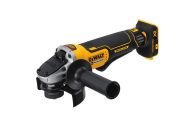
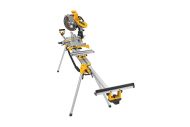
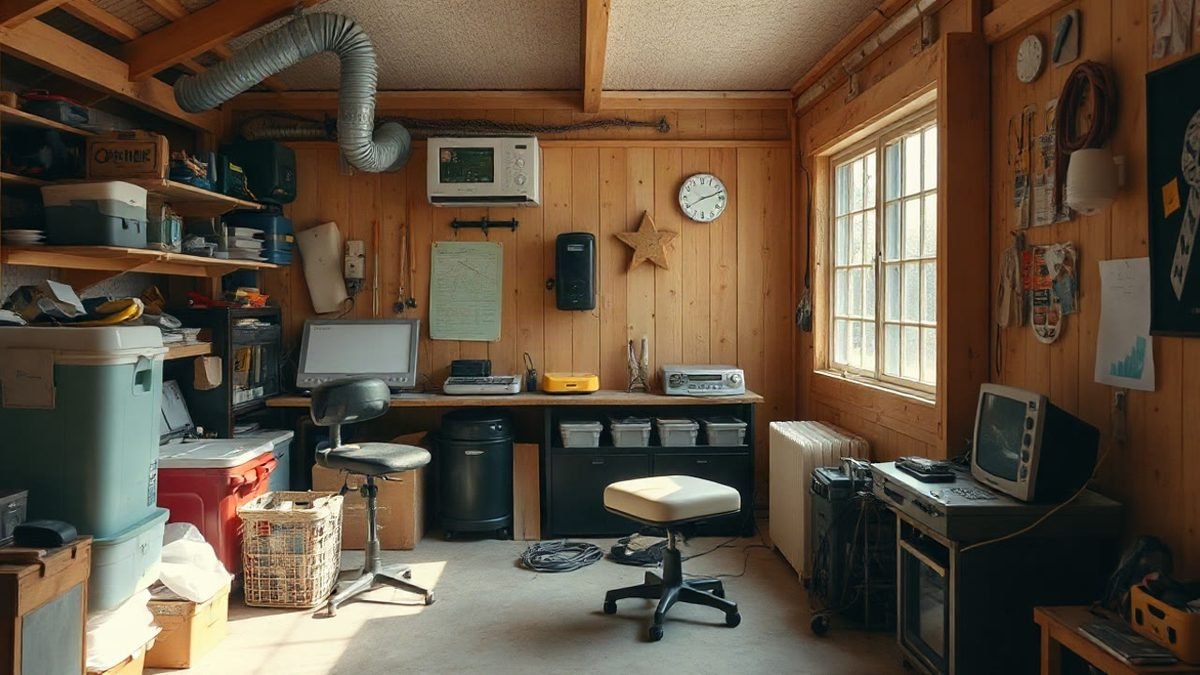
Walk into your workshop and write down everything that plugs in or draws power. For a typical hobby woodworking shed, that list usually looks something like this:
- Table saw or circular saw
- Pillar drill or corded drill
- Router
- Planer or thicknesser
- Dust extractor or shop vac (see our guide to workshop dust control basics)
- Air compressor
- Battery chargers for cordless tools
- Workshop lighting, radio, and a heater or fan depending on the season
Do not forget the unglamorous items. A phone charger barely registers, but an electric space heater can consume more watt-hours in an evening than every tool combined. If your shed is part of a wider off-grid setup, the same audit logic applies to water pumps and other utilities, as covered in our article on off-grid water for shed workshops.
Step two: find the real wattage of each tool
Every electrical item in the UK should have a rating plate or label stating its power draw in watts (W) or kilowatts (kW). Check the body of the tool, the motor housing, or the plug-top transformer. If the label gives amps instead, multiply amps by volts (230 V in the UK) to get watts. A tool labelled at 5 A therefore draws roughly 1,150 W while running.
Running wattage versus starting wattage
Tools with electric motors, such as saws, extractors and compressors, draw a surge of current when they start. This starting wattage is commonly several times the running figure. A 1,500 W dust extractor may briefly pull far more at switch-on. Why does this matter? Because breakers, inverters and generators all have limits on short bursts as well as sustained load. Because breakers, inverters and generators all have limits on short bursts as well as sustained load, starting several motors at once can push a supply past those limits even when the running loads alone are well within them, so stagger motor start-ups where you can.
A good working habit is to note both figures for motor-driven tools: the rated wattage from the label, and an estimated starting figure of three to four times that amount. You will only need the starting figure when checking whether the supply can handle simultaneous startups.
Step three: estimate realistic daily run times
This is where most people overestimate. A hobby woodworker might spend a Saturday afternoon in the shed, but the table saw itself is only spinning for perhaps 20 to 40 minutes of that time. The dust extractor, however, runs whenever the saw does, and the lights run the whole session.
For each item, write down an honest estimate of hours used per day. If usage varies, calculate a typical session and a heavy session, then plan around the heavy one. Sample figures for a realistic hobby session might look like this:
- Table saw: 1,500 W for 0.5 hours = 750 Wh
- Dust extractor: 1,200 W for 0.5 hours = 600 Wh
- Pillar drill: 750 W for 0.25 hours = about 190 Wh
- LED lighting: 60 W for 3 hours = 180 Wh
- Battery chargers and radio: 100 W for 2 hours = 200 Wh
Add it up and that session uses roughly 1,900 watt-hours, or just under 2 kWh. A heater session would add substantially more, which is worth modelling separately if you work through winter.
Step four: turn the numbers into decisions
If you are on mains power
Your total tells you whether a standard radial circuit is adequate. Whether your circuit is adequate depends on your own peak figures and the rating of the circuit, so work from your calculation rather than assumptions; the surge issue means you should also avoid starting the compressor and the table saw at the same moment. If your peak figures approach the limits of your circuit, run large machines one at a time or consult a qualified electrician about a dedicated supply. Electrical work on fixed wiring is not a DIY job.
If you are considering batteries or solar
For a stand-alone system, your daily watt-hour total is the number everything else is sized against. Battery capacity, inverter rating and panel output all follow from it, and the surge figures determine your inverter size. This is exactly why the calculation comes first: a system sized around a carefully calculated, realistic daily watt-hour total is a very different project from one imagined around vague hopes of “free electricity”.
Step five: use your number as a sanity check on DIY energy plans
With a real consumption figure in hand, you are in a much stronger position to evaluate alternative energy products. The Energy Revolution System, for example, is sold as a digital DIY guide for building a compact, Tesla-inspired generator using a bifilar coil design and commonly available components, according to the seller’s marketing (LinkedIn). The promotional material claims the device can cut power bills by up to 80% and deliver complete energy independence, and cites use by over 102,000 households (MalwareTips).
Those are the seller’s claims, and it is important to be clear that they are claims. Independent coverage has raised significant red flags about the “free electricity” story behind them (MalwareTips), and the review site Everyrated gives the product 2.7 out of 5 based on the quality of buyer-facing information it could document, noting that meaningful evidence gaps remain (Everyrated). No independent engineering evidence in our sources demonstrates the claimed output, and no small coil-based device can be assumed to power a workshop running a table saw and dust extractor; your own watt-hour calculation should make that scale obvious.
There are also practical checks worth making before buying any digital product of this type. Everyrated advises verifying the exact format, current price, billing terms, refund policy and support route on the product page and order form before purchasing (Everyrated). The sales funnel for this product has been described as using rotating domains, long sales videos and urgency popups (MalwareTips), which are worth knowing about in advance.
Who might it suit? If you enjoy tinkering with electromagnetic experiments, treat it as a low-cost educational project and read the refund terms carefully, the guide may hold some hobby interest. Who should skip it? Anyone whose goal is actually powering a shed workshop. For that, established options exist: mains extension from the house, a properly sized battery and inverter, or DIY solar power for sheds using panels from reputable suppliers. Solar has its own costs and limitations, but at least the physics and the sizing maths are well understood, and they start with exactly the calculation in this article.
If you still want to look at the guide yourself, you can check the Energy Revolution System’s current product page here, ideally with your watt-hour figures and a clear head about the claims involved.
Common mistakes in workshop electricity load calculations
Even careful people make the same handful of errors. Watch out for these:
- Forgetting surge loads. Total running watts mean nothing if the starting surge of two motors trips your supply or shuts down an inverter.
- Ignoring heating. Electric heaters dwarf tool loads. Model winter sessions separately from summer ones.
- Using nameplate wattage for everything. Some tools draw less in practice, but battery chargers and shop equipment can also draw more intermittently. Where it matters, measure with a plug-in energy meter.
- No safety margin. Aim to keep your expected peak load well below your supply or inverter capacity. Ten to twenty per cent headroom prevents nuisance trips.
- Counting everything at once. If you genuinely never run the thicknesser and the extractor simultaneously, say so honestly. But be realistic, not optimistic, about your habits.
How often should you redo the calculation?
Revisit your shed workshop power calculation whenever you add a significant tool, change how you work, or start considering a new power source. A new air compressor or a move to winter evening sessions can double your consumption without you noticing. Keeping a one-page audit taped inside a cupboard door makes updates painless, and pairs nicely with a tidy setup, as described in our guide to organising a small shed workshop.
Affiliate recommendation
Mentioned in this article: Energy Revolution System
Energy Revolution System is a guide to do-it-yourself home alternative-energy projects. Check the seller’s claims carefully before buying.
Read the seller’s information →
Affiliate link: we may earn a commission if you purchase, at no extra cost to you. We have not tested this product.
FAQ
How many watts does a typical shed workshop need?
where one large machine runs at a time typically has a peak running load of around 2,000 to 3,000 W, with much higher brief surges at motor startup. Actual daily consumption depends entirely on run times, so work out watt-hours rather than relying on the peak figure alone.
What is the difference between watts and watt-hours?
Watts measure how fast something uses power at a moment; watt-hours measure total energy used over time. A 1,500 W saw running for half an hour uses 750 watt-hours. Supply capacity is about watts; battery and system sizing is about watt-hours.
Can a DIY generator realistically power a shed workshop?
It depends entirely on the claimed output, which any honest product should state in watts. Powering tools with motor surge loads demands substantial, well-documented capacity. In the case of the Energy Revolution System, the seller’s claims of large bill reductions are not supported by independent engineering evidence in our sources, so treat such claims with caution and rely on your own consumption figures.
Do I need an electrician to run power to my shed?
For fixed wiring from your house to a shed in the UK, yes. A qualified electrician should design and install the supply, select the cable and breaker sizes, and certify the work. Your own calculation is still valuable: it tells the electrician what load you expect to run.
What is the cheapest way to reduce my workshop’s power use?
Switch to LED lighting, fix compressed-air leaks if you use pneumatics, maintain sharp tooling so cuts take less time, and unplug idle chargers and heaters. These measures cost little and shrink the number you need any power system to meet.
Conclusion: measure first, then decide
A shed workshop power calculation takes an hour with a notebook and a plug-in meter, and it pays off twice over. It keeps your mains supply safe and sensible today, and it gives you a firm basis for judging any alternative energy proposal tomorrow. When a product promises dramatic savings without stating output in watts or consumption in kilowatt-hours, your own audit is the most reliable check you have. Start with the numbers, keep a healthy margin for surges, and let the figures, not the marketing, drive the decision. Once your audit is done, it is worth pairing it with a tidy, well-planned layout so every watt and every square foot works harder for you.
Sources
- Energy Revolution System Review: Is This DIY Guide Legit?
- Energy Revolution System Scam EXPOSED: The Buried Tesla Blueprint Con
- Energy Revolution System Reviews and Complaints 2026: Legit
- Energy Revolution System Review | Everyrated